
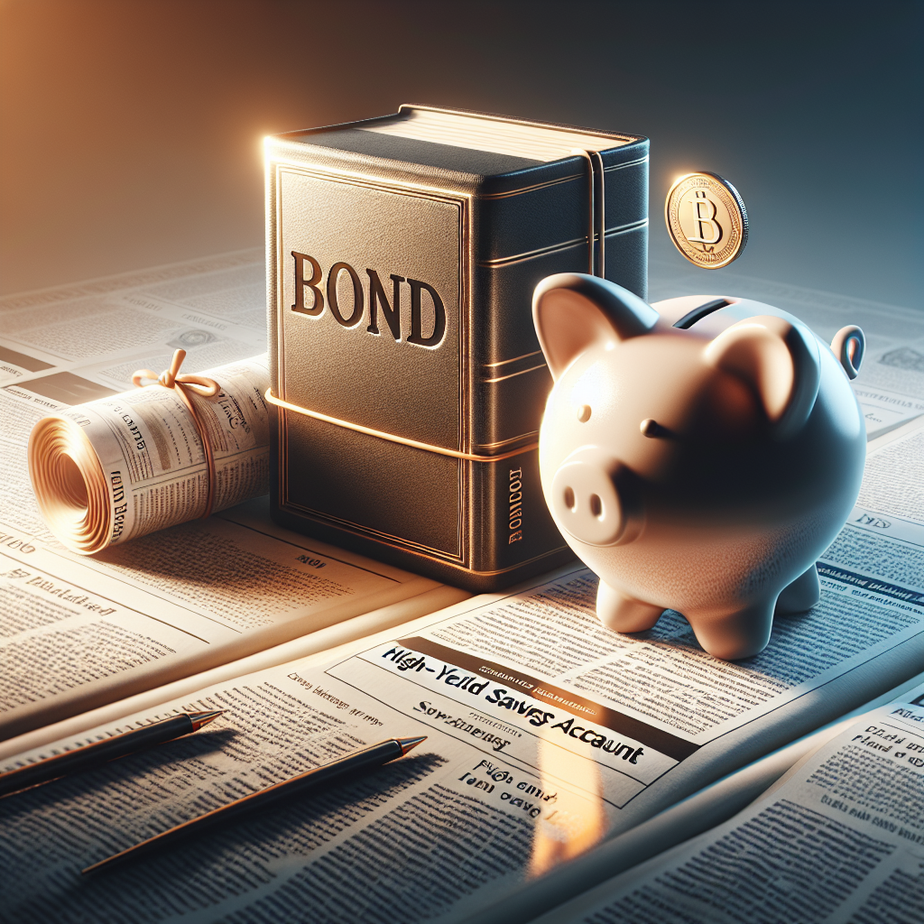
When deciding where to allocate your savings, interest rates and accessibility are crucial considerations. High-yield savings accounts (HYSAs) have recently become a favorite among savers due to their relatively higher returns compared to standard savings accounts. Yet for medium- to long-term financial goals, bonds could potentially provide better returns, even though they aren’t as widely used—only about 7.5% of U.S. households invest in them. With guaranteed interest payments and varied durations, bonds may outperform HYSAs depending on market conditions.
A bond is a type of investment where you essentially lend money to a government or corporate entity for a fixed period, in exchange for regular interest payments. These terms can span from just a few years up to 30 years, with semiannual interest typically paid out. Unlike savings accounts, bonds lock up your money but may be sold before maturity, sometimes with the benefit of higher returns if market interest rates or inflation decrease. Many people unknowingly hold bonds through their retirement accounts, but direct investment options are available as well. Treasury bonds, issued by the U.S. government, can be purchased through Treasury Direct in units from $25 up to $10,000. Municipal bonds, from local governments, and corporate bonds, sold via brokers with commissions, offer additional choices. Corporate bonds generally start at $5,000.
In contrast, high-yield savings accounts function similarly to traditional savings accounts but boast significantly higher returns. While the average savings account offers just 0.38% in interest, HYSAs can provide rates exceeding 4%. These accounts are widely accessible through banks and credit unions, and many don’t require monthly fees or minimum deposits. Online banks, with lower operating costs, often extend the most lucrative HYSA rates. The key advantage is liquidity—money in a HYSA can be withdrawn anytime without penalties. This makes them ideal for people who might need quick access to their funds.
Despite similarities in safety, the mechanics and uses of bonds and HYSAs differ. Both are low-risk options that protect your principal and offer some interest accumulation. However, HYSAs allow flexible deposits and withdrawals with minimal complications, while bonds could incur losses—or gains—if sold before maturity based on prevailing market conditions. Moreover, corporate bonds carry an added risk: default by the issuing company, which could result in a total or partial loss of investment.
Neither option is likely to yield dramatic wealth growth, as the typical return lies between 2% and 5%. Yet each serves distinct purposes. For short- to mid-term savings goals—such as within a four-year window—a HYSA is often preferable due to easy fund accessibility and predictability. In contrast, bonds can offer more robust and steady growth for longer-term goals. Historically since the 1970s, bonds have delivered average annual returns of 3.1%, surpassing the 0.6% average for bank deposits. Therefore, financial advisors often recommend diversifying with a mix of bonds, CDs, and low-penalty savings accounts to secure two to four years’ worth of living expenses, especially as a safeguard against having to liquidate stocks during an economic downturn.
Certain life stages and economic projections make bonds particularly attractive. For individuals nearing or in retirement, shifting more assets into low-volatility investments like bonds is prudent. With less time to recover from market setbacks, the stability of bonds becomes valuable. Strategies like bond ladders—where bonds mature at staggered intervals—can create a reliable, ongoing income stream. Currently, Americans over 70 invest less than 12% of their portfolios in bonds, on average. But financial professionals suggest more generous allocations as you age: from 0%–15% in your 40s to up to 60% post-70.
The broader economic context is also vital. Bond prices are inversely related to interest rates, meaning when rates fall, bond values generally rise. Market analysts anticipate possible interest rate cuts by the Federal Reserve later in 2025, though no changes are expected before September. The timing could make bonds more appealing later this year, suggesting careful planning is essential.
Meanwhile, HYSAs maintain their reputation for safety and usefulness—especially when held at federally insured institutions. It’s important to confirm FDIC or NCUA insurance and avoid unnecessary fees. Business high-yield savings accounts also exist, offering firms a secure and interest-bearing place to store excess operational funds. And as online communities debate, there may be merit in holding multiple HYSAs to optimize interest across different bank promotions or safeguard excess deposits.
In the end, the choice between bonds and high-yield savings accounts hinges on your financial timeline, comfort with risk, and future liquidity needs. While each holds benefits and limitations, a strategic mix of both may offer the most balanced approach for moderate and conservative savers alike.